History & Tradition
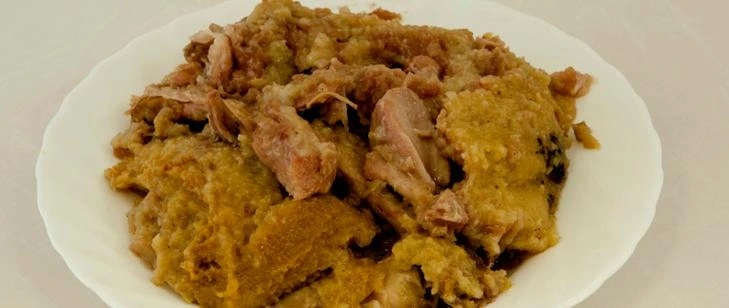
Kugiel przedborski, also known as kugel, cholent, or potato babka, is a gem of regional cuisine, testifying to the intertwined culinary histories of Polish and Jewish communities. This hearty, slow-baked casserole evolved from a Sabbath dish into a specialty celebrated at festivals. Its ingredients—grated potatoes, meat, and onions—reflect ingenuity in creating a nutritious meal. Recognized as a Traditional Product of Poland since 2009, kugiel embodies the cultural fusion of towns like Przedbórz.
Preparation begins with high-starch potatoes, grated to release moisture and create a sticky consistency. Onions are grated for sweetness, and salt and pepper add depth. In the Polish adaptation, fatty pork cuts like ribs and knuckles are used. Ingredients are layered in a large enamel pot.
Baking traditionally takes place in a bread oven overnight (about 12 hours), honoring Sabbath cooking prohibitions. It starts at high heat (250°C) for browning, then lowers (100°C) for slow simmering. This creates a caramelized crust and a moist center with a smoky aroma. Modern ovens mimic this, but wood-fired ones remain superior for purists.
Historically, kugiel originates from pre-WWII Przedbórz, where Jews were the majority. Their kosher versions (cholent) influenced local cuisine. Christians adapted it post-war with pork. Today, it is a cultural symbol celebrated at the Kugiel Festival. Legends, like pots thrown into the Pilica river, stem from Jewish folklore. The dish remains a symbol of simplicity and community.